

January 24, 2026
I recently picked up a sketchbook again.
Not casually. Not just doodling here and there. But with a level of focus I haven’t brought to art in a long time. That alone sent me down a familiar path… thinking about who I was the first time art became serious for me, back in the early 1990s, and how different the world of learning looked then compared to now.
The contrast is staggering.
In the first half of the 90s, there was no YouTube. No online courses. No Google. The internet, for most practical purposes, didn’t exist in my daily life. If you wanted to learn something, you learned it through libraries, bookstores, and doing the work. A lot of the work. Often alone.
If you didn’t know how to do something, you went looking for the information. And if you couldn’t find it, you experimented until you figured it out. That’s how I learned to stretch my own canvases so I could work large. How I learned to sell art, build a portfolio, price my work, and present it to people who had never heard of me.
That environment shaped me in ways I didn’t fully appreciate until now. And it’s worth saying this clearly. Being self-taught wasn’t the easy or obvious path back then. Most people would have said to go to art school, to take the formal route. I chose not to. I took the harder, less certain path, largely on my own. Not because it was noble or strategic, but because that’s how I was built.
Constraint Was the System
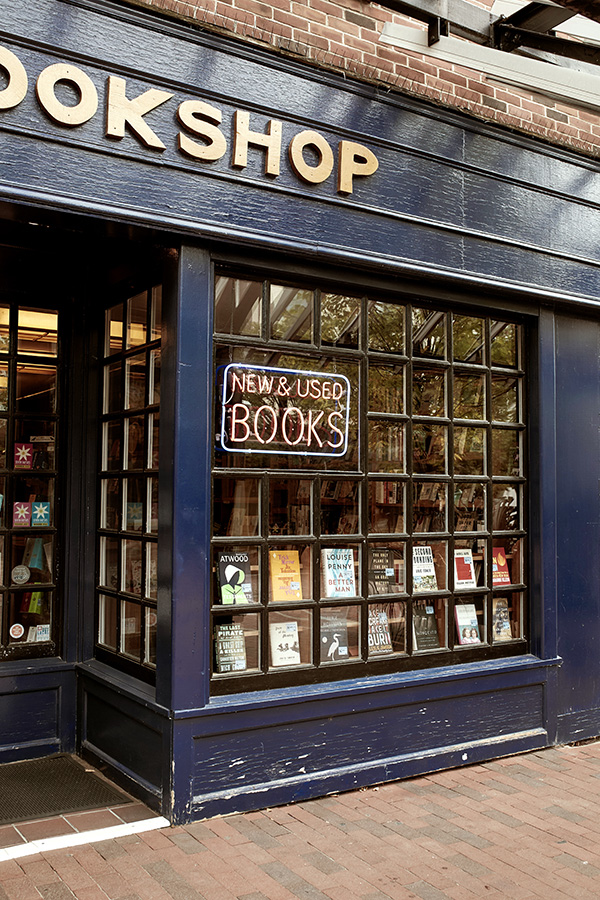
Learning back then was constrained by default.
You couldn’t binge ten video tutorials in an afternoon. You couldn’t compare a hundred different approaches in an hour. You had to choose what to focus on, because access was limited and time was precious. Today, you can spin up a focused project inside ChatGPT or Grok, have ongoing conversations about technique, process, history, and critique, and compress what once took months or years into weeks.
As an aside, I’m doing exactly this right now (in Grok), and honestly… wow. I’m enjoying the ability to riff on ideas, discuss history, technique, and style, and follow threads of curiosity in real time. I’m on cloud nine doing it.
But to get back to the original point of this section, that level of constraint forced a few things:
- Commitment to the process
- Patience with slow progress
- A willingness to make mistakes without constant validation
- Depth over breadth, often by necessity
You didn’t consume endlessly. You applied what you had, because that’s all you had. I was largely self‑taught, with only a small circle of other artists around me. Beyond that, it was mostly me, figuring things out on my own.
Art as a Small Business, Not a Hobby
When I was pursuing art seriously in the 90s, it wasn’t just about creating work. It was a small business, even if I didn’t have that language at the time.
I bartended for a living while I built my art practice. I ran my own shows. I did commission work. I promoted locally. I sold pieces. I learned what resonated with people, what didn’t, how to present work, how to price it, how to talk about it.
It was scrappy. Manual. Very analog.
Looking back now, I recognize it for what it was. Not a dream or a phase, but an early lesson in building something from nothing with limited tools and a lot of persistence.
The World We Live In Now
Fast forward to today, and the learning landscape is unrecognizable compared to that era. This is where it really hit me. I remember sitting back, almost stunned, realizing just how different the starting line is now. It was a genuine wow moment. Artists, builders, creators today have access to things we couldn’t have imagined back then, and many don’t fully realize how extraordinary that is.
Today, we have:
- Instant access to world-class instruction
- Communities around every discipline imaginable
- Tools that compress years of trial and error
- Distribution channels that once required gatekeepers, which I worked around at the time by running my own shows
- Examples, critiques, workflows, and frameworks available on demand
This isn’t just true for art. It’s true for business. Development. Design. Writing. Marketing. AI. Almost anything worth learning.
We live in a time of unprecedented access.
The Aha Moment

Here’s the realization that hit me hard.
If that early-20-something version of me, with the energy, devotion, and obsession I had for art back then—when I was convinced I might be the next Picasso and genuinely believed I could make a real impact on the world—had access to today’s tools and learning resources… the path would have been dramatically different.
Not guaranteed success. Not instant results. But clearer. Faster. With far more leverage.
Access doesn’t replace the work. But it amplifies it.
And that’s the part most people miss.
What Still Hasn’t Changed
Despite all this abundance, the most important ingredient hasn’t changed at all.
If anything, the challenge today may be the opposite problem.
There’s too much information. Conflicting opinions. Bad advice mixed in with good. Endless rabbit holes that feel productive but don’t actually move you forward. Learning now requires discernment in a way it didn’t before.
You still need:
- The desire to seek out the right information
- The commitment to work through confusion and contradiction
- The discipline to apply what you learn instead of endlessly consuming
- The patience to sit with discomfort and slow progress
Most people today don’t struggle because information is unavailable. They struggle because they don’t filter, choose, and commit long enough to apply it.
Access without devotion leads to consumption.
Devotion, even with imperfect information, leads to progress.
That was true in the 90s. It’s still true now.
Why I’m Bringing Art Back Into My Life
By the late 90s, I let go of the idea of making a living solely through art. I won’t lie, those years were a struggle, and the life I envisioned for myself required more certainty as I got older. Life moved on. Careers shifted. I built businesses. Web Design agencies. Art never fully disappeared, but it became something I revisited occasionally rather than lived inside.
Recently, that changed.
I’m picking it up again with intention. Not to replace what I do for a living. Web design and development is still my business, through Unified Web Design, and I still care deeply about it. But art is coming back as something that lives alongside it.
I want to give it room to breathe.
To water it.
To nurture it.
Without pressure.
Without urgency.
Without needing it to become something life-altering right now.
And yes, that’s a challenge for me. I’m wired to want to be the next Picasso in everything I do. Learning to let something exist without forcing it to become monumental is part of the practice too.
It’s a creative outlet first. A way to express myself. A practice.
And maybe, over time, it grows into something more. Maybe it doesn’t. Maybe retirement looks like spending my days in a studio, creating for the sake of creating. I’m okay not knowing.
A Final Thought
We live in a special time. And I know, especially for younger generations, it can be hard to fully grasp just how special it really is.
I lived on the other side of that divide. In a time when being self‑taught meant persistence by default. It meant hunting for knowledge in libraries and bookstores, piecing things together from whatever you could find, and doing a lot of quiet work without reassurance that you were on the right path.
The tools are here now. The knowledge is accessible. The barriers that once slowed progress have been lowered dramatically.
What remains is the same question it’s always been.
If you need to learn something in whatever context you find yourself in, are you willing to be self‑taught? Are you willing to choose, filter, and commit? And even with endless access to information, are you willing to do the work long enough to see where it actually leads?
- The Work Isn’t Going Away. It’s Changing. - February 28, 2026
- I’m Not Scaling. I’m Stabilizing. - February 15, 2026
- Learning Without Shortcuts: What a Self-Taught Art Path Taught Me About Building Anything TODAY - January 24, 2026